Save big on select building materials!



Understanding FRP Grating: Benefits, Types, and Applications
11/20/20252 min read
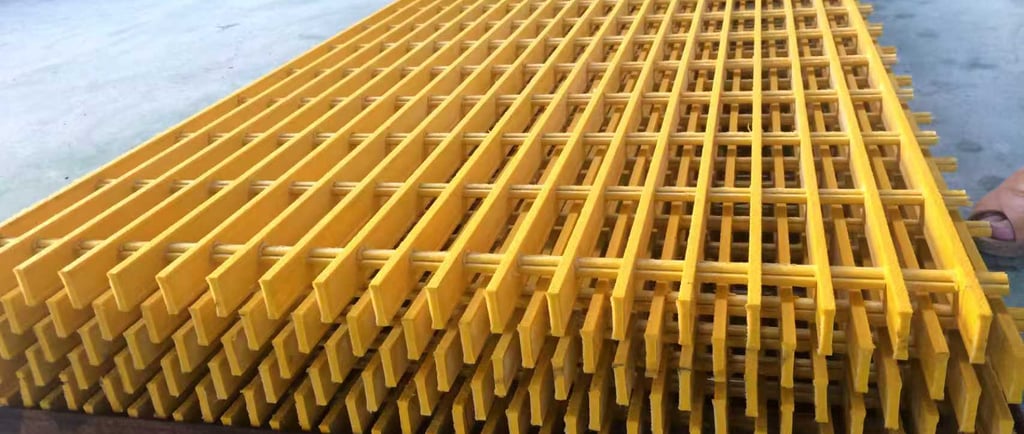
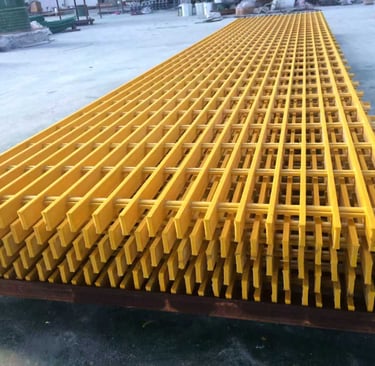
What is FRP Grating?
FRP (Fiberglass Reinforced Plastic) grating is a composite material composed of a fiberglass matrix reinforced with glass fibers. This innovative construction method results in a strong, lightweight material that is increasingly favored in various industries, especially those requiring enhanced safety and durability. Known for its suitability in harsh environments, FRP grating is designed to resist corrosion, making it an ideal choice for chemical plants, marine applications, and wastewater treatment facilities.
Main Types of FRP Grating
There are two primary types of FRP grating: molded and pultruded. Molded grating is produced by creating a mold filled with epoxy or polyester resin reinforced with fiberglass. This method yields a product with high strength and unmatched anti-slip properties. On the other hand, pultruded grating is formed by continuously pulling fiberglass through a die, resulting in a more uniform thickness and a higher strength-to-weight ratio. Both types are effective and chosen based on project specifications and usage conditions.
Key Advantages of FRP Grating
When comparing FRP grating to traditional materials such as steel, several advantages become evident. For starters, FRP grating exhibits exceptional corrosion resistance, enabling it to withstand exposure to harsh chemicals without compromising structural integrity. Additionally, its high strength-to-weight ratio makes it a more efficient choice, reducing transportation and installation costs. Being non-conductive, FRP grating is ideal for electrical applications, while its anti-slip feature ensures safety in wet conditions. These attributes make FRP grating an increasingly popular alternative in various settings.
Applications of FRP Grating
FRP grating finds extensive application across multiple sectors. It is widely used for industrial flooring, providing a robust surface capable of supporting heavy loads while preventing slips. Platforms and walkways in chemical plants benefit from FRP’s resistance to chemicals, enhancing employee safety. Additionally, marine environments, including docks and piers, leverage FRP’s resilience against saltwater corrosion, while the wastewater industry utilizes it for similar reasons.
Tips for Selecting FRP Grating
When selecting FRP grating, consider the following factors: the type of resin used (which may affect chemical resistance), the required thickness (which can influence load capacity), and the load rating to ensure it meets performance criteria. Specifying these parameters correctly is crucial for achieving optimal performance in its intended application.
Basic Installation and Maintenance Notes
Installation of FRP grating is typically straightforward, requiring standard tools for cutting and fixing. Proper maintenance involves periodic inspections to ensure structural integrity and safety. Cleaning can be carried out using water and mild detergent, further enhancing its lifespan.
Contact Us for Specifications
For more information regarding FRP grating specifications and to obtain a quotation tailored to your specific requirements, please contact us. Our experts are available to assist you in making the best choice for your projects.